
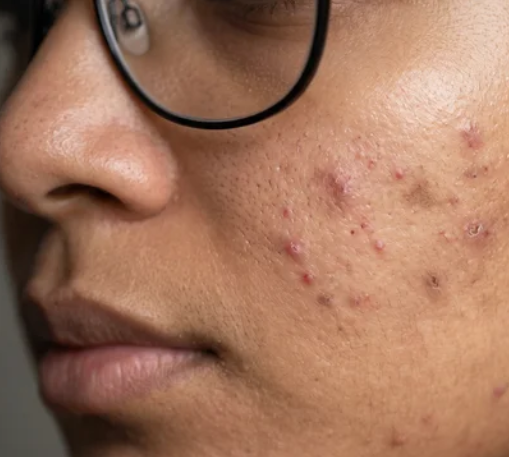
If your spots keep turning up on the sides of your nose, between your eyebrows or along the tops of your cheeks, your glasses may be part of the problem. Acne from glasses is common, it is usually mild, and it tends to settle once you deal with the friction, the build-up on the frames and the fit. This guide explains why it happens and what actually helps.
Key takeaways
- Breakouts where your frames sit are usually acne mechanica: acne triggered by friction, pressure, heat and trapped sweat.
- Clean nose pads and frames daily with mild soap and water, and replace yellowed silicone pads.
- A proper fit stops frames sliding onto your cheeks; Asian-fit frames suit lower nose bridges.
- Benzoyl peroxide or salicylic acid usually clears mild breakouts within six to eight weeks.
- An itchy, scaly rash under metal frames may be a nickel allergy rather than acne.
What Is Acne From Glasses?
Most breakouts under frames are a form of acne mechanica: acne triggered or worsened by friction, pressure, heat and trapped sweat on the skin. Dermatologists see the same pattern under helmet straps, sports pads, backpack straps and face masks. Glasses do the same thing on a smaller scale, at the exact points where they touch your face.
Repeated rubbing and pressure irritate the hair follicle opening. Add heat and sweat, and the pore is more likely to block with oil and dead skin. That blockage becomes a whitehead, blackhead or small red bump. Acne mechanica does not usually create acne from nothing. It tends to flare acne in people who are already prone to it. If you want the bigger picture of how a pore blocks and becomes inflamed, see our guide to the main causes of acne.
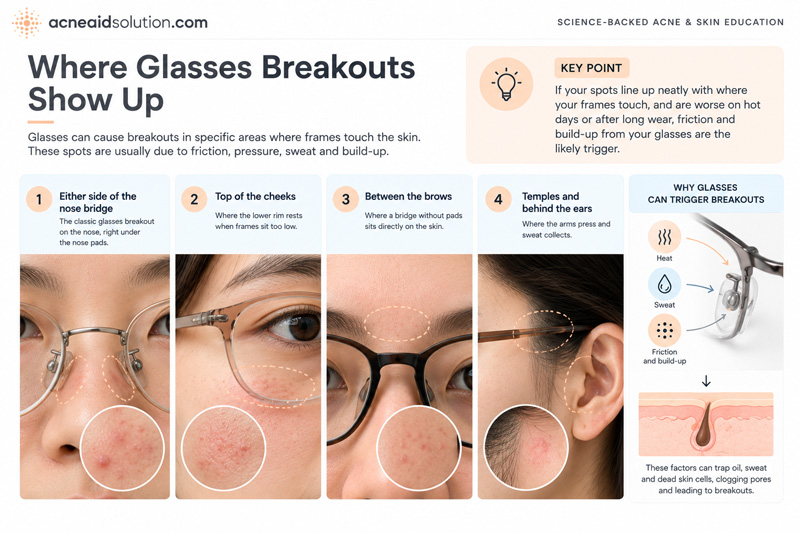
Where glasses breakouts show up
- Either side of the nose bridge: the classic glasses breakout on the nose, right under the nose pads.
- Top of the cheeks: where the lower rim rests when frames sit too low.
- Between the brows: where a bridge without pads sits directly on the skin.
- Temples and behind the ears: where the arms press and sweat collects.
Why Nose Pad Acne Happens
Nose pad acne comes from a combination of factors working together at a very small contact point.
- Pressure: the full weight of the frame rests on two small pads. Heavier lenses and frames concentrate more pressure on the same patch of skin.
- Friction: every time you push your glasses up, smile or talk, the pads shift slightly against the skin.
- Heat and sweat: in Singapore’s heat and humidity, skin under the pads stays warm and damp for most of the day.
- Oil: the nose and central face have a high density of oil glands, so pads sit on some of the oiliest skin you have.
Low Nose Bridges and Glasses Acne on Cheeks
Many people, including many with East and Southeast Asian facial features, have a lower, flatter nose bridge and higher cheekbones. Frames designed around a higher bridge often slide down the nose. Once they slip, the lower rim can rest directly on the cheeks.
That creates a second friction zone. Every time you smile, your cheeks push the frame up, and the rim rubs as it settles back down. Glasses acne on the cheeks often appears as a line of small bumps exactly where the rim touches. The constant sliding also means you push your glasses up more, which adds more friction and transfers more oil from your fingers to the pads.
Frames built for this face shape help. Asian-fit frames typically have a higher or adjustable nose pad position, a more curved fit and lens shapes that clear the cheeks. Opticians can advise on these if standard frames keep slipping.
Oil and Makeup Build-Up on Frames and Pads
Nose pads collect a mix of sebum, sweat, dead skin, sunscreen and makeup. Foundation and concealer around the nose are easily wiped onto pads, and that residue is pressed back onto your skin all day. Over time, a film builds up in the grooves of the pad and around the screw or hinge.
That film is a good environment for bacteria and it keeps oily residue in contact with pores. If your pads look cloudy, yellowed or slightly sticky, they need cleaning or replacing.
How to Clean Your Glasses Properly
A quick daily routine makes a real difference:
- Rinse the frames and lenses under lukewarm running water. Avoid hot water, which can damage lens coatings.
- Rub a drop of mild, lotion-free dish soap over the nose pads, bridge, rims and arms with your fingertips.
- Use a soft toothbrush on the nose pads and the small gap between pad and arm, where grime collects.
- Rinse thoroughly and dry with a clean microfibre cloth.
- Wash the microfibre cloth regularly. A dirty cloth just spreads oil around.
Avoid alcohol, acetone or household cleaners on frames unless the manufacturer says they are safe, as they can damage coatings and some frame materials. If you wear makeup, consider leaving the area under the pads makeup-free.
Nose Pad Materials: Silicone, Metal and Hypoallergenic Options
Pad material affects both comfort and irritation.
| Pad type | Pros | Watch out for |
|---|---|---|
| Silicone | Soft, grips well, spreads pressure | Can yellow and trap grime; replace when discoloured |
| Hard plastic (PVC/acetate) | Easy to clean, inexpensive | Slippery on oily skin, so frames slide more |
| Metal (including titanium) | Durable, slim | Some metal alloys contain nickel; titanium is generally well tolerated |
| Moulded-in bridge (acetate frames) | No separate pads to clean | Cannot be adjusted much; may sit low on a low bridge |
Hypoallergenic options include titanium frames and pads, and medical-grade silicone pads. Nose pads are cheap and easy for an optician to swap.
Nickel allergy: a common lookalike
Nickel is one of the most common causes of allergic contact dermatitis, and some metal frames, hinges and pad arms contain it. A nickel reaction usually looks different from acne: an itchy, red, scaly or weepy rash where metal touches the skin, rather than pimples or blackheads. If your “acne” is itchy and patchy, consider whether your frames are the trigger. A doctor can confirm a metal allergy with patch testing.
Why Proper Fit Matters
A frame that fits well spreads its weight evenly, stays put and does not touch your cheeks. Signs your glasses need adjusting:
- Red marks or dents on your nose that last more than a few minutes after you take them off
- Frames that slide down when you look down or sweat
- The lower rim touching your cheeks when you smile
- Pressure or soreness behind the ears
A professional frame adjustment can reposition the pad arms, widen or narrow the pads, and re-angle the arms so less pressure falls on one spot. It is usually quick, and many opticians do it as a routine service. Lighter lens materials can also reduce the load on your nose.
Treating Breakouts From Glasses
Once the trigger is reduced, standard mild-acne treatment usually works well.
- Benzoyl peroxide (2.5% to 5%): reduces acne bacteria and inflammation. Lower strengths are often as effective and less irritating. It can bleach fabrics and may discolour some frame finishes, so let it dry fully before putting your glasses on.
- Salicylic acid: helps clear blocked pores and suits blackheads and whiteheads on the nose.
- Gentle cleansing: wash the area morning and night, and after sweating, with a mild cleanser. Avoid scrubbing, which adds more friction.
- Light, non-comedogenic moisturiser: helps if treatments make the skin dry or flaky.
- Breaks from your glasses: take them off for short periods when you can, or alternate with contact lenses if your eye doctor says they suit you.
Avoid picking or squeezing. The skin on the nose and cheeks marks easily, and picking increases the risk of dark marks and acne scars. Our article on what to do during an acne breakout covers this in more detail, and our guide on how to prevent acne has more day-to-day habits that help.
When It Might Be Something Else
Not every bump under your frames is acne. Consider other causes if:
- It itches or looks like a rash: allergic or irritant contact dermatitis from metal, plastic, coatings or cleaning products.
- There is flushing, persistent redness or visible small blood vessels: this may be rosacea, which can be aggravated by heat and friction and is treated differently from acne.
- There is one firm, sore, thickened patch on the side of the nose: long-term pressure from heavy frames can cause a localised skin reaction that needs a doctor’s look.
- A spot does not heal, bleeds or keeps coming back in the same place: any non-healing spot on the face should be checked.
When to See a Doctor
See a GP or dermatologist if your breakouts do not improve after six to eight weeks of better cleaning, fit and over-the-counter treatment, if you have painful or deep spots, if you are developing dark marks or scars, or if you suspect an allergy. Prescription options such as topical retinoids, topical antibiotics in combination with benzoyl peroxide, or oral treatments may be needed. Our overview of acne treatments in Singapore explains the main options.
Frequently Asked Questions
Can glasses really cause acne?
Glasses can trigger or worsen acne through friction, pressure, heat and trapped oil, a pattern known as acne mechanica. They mainly affect people who are already prone to breakouts.
How often should I clean my nose pads?
Ideally once a day with mild soap and water, plus a quick wipe after heavy sweating. Replace silicone pads when they turn yellow, harden or crack.
Will switching to contact lenses clear my nose acne?
If glasses are the main trigger, breakouts at the contact points often improve with less wear. Contact lenses are not suitable for everyone, so discuss this with your optometrist or eye doctor.
Are titanium frames better for acne-prone skin?
Titanium is light and generally well tolerated by people with nickel sensitivity. A lighter frame also puts less pressure on the nose. Fit and cleaning still matter more than material alone.
How long does glasses acne take to clear?
Once friction and build-up are addressed, mild breakouts often settle within a few weeks. Acne treatments generally need six to eight weeks to show their full effect.
Sources
- American Academy of Dermatology: 10 skin care habits that can worsen acne
- American Academy of Dermatology: Pimple popping: why only a dermatologist should do it
- HealthHub Singapore: Acne (reviewed January 2026)