
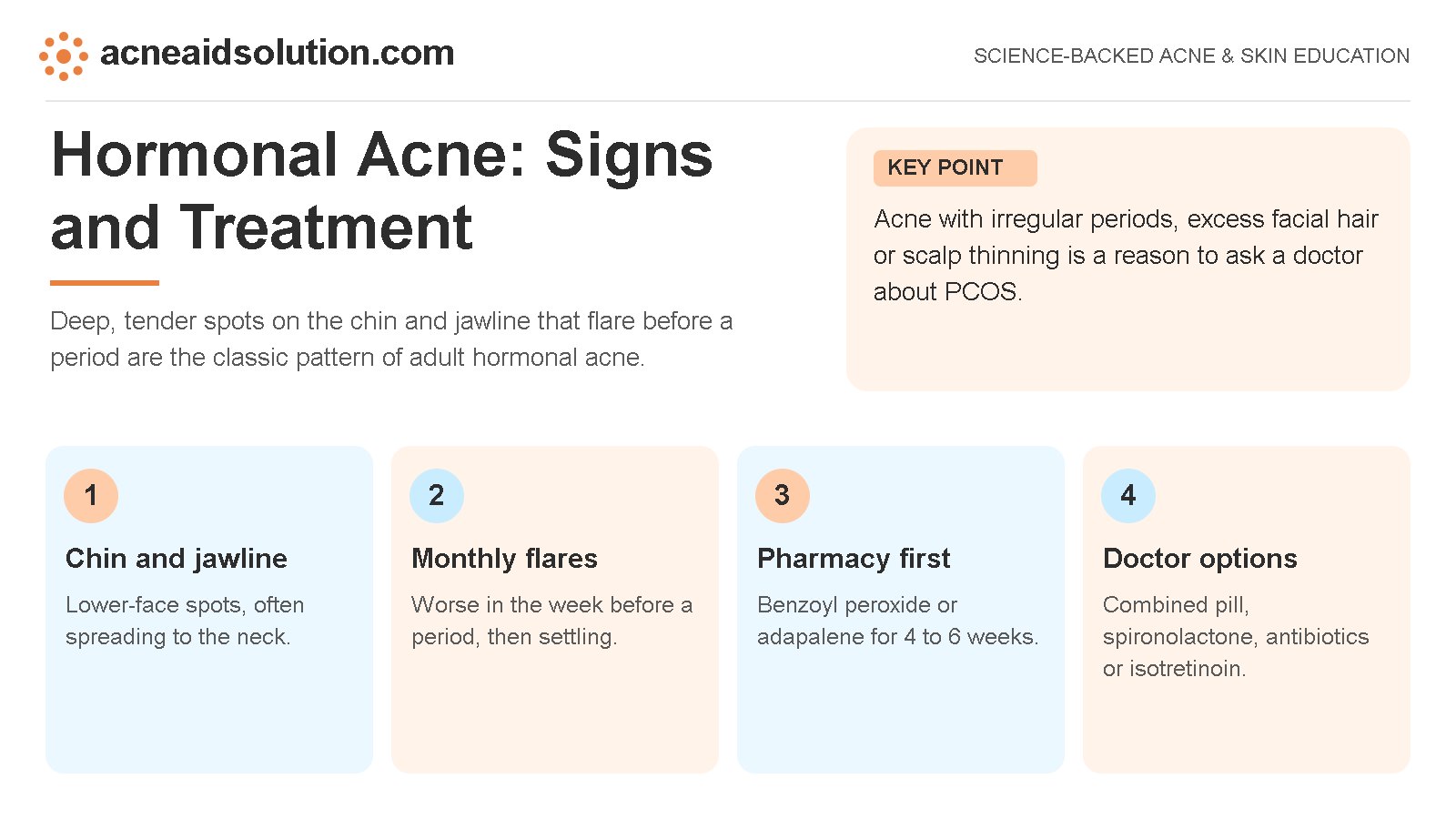
Hormonal acne is adult acne driven largely by androgens (hormones such as testosterone) acting on the skin’s oil glands. It typically shows up as deep, tender spots on the chin, jawline and lower face that flare before a period. It is treatable: pharmacy products help milder cases, and a doctor can prescribe hormonal tablets or other medicines when they are not enough.
Key takeaways
- Hormonal acne usually means inflamed spots on the chin, jawline and lower face, often worse before a period.
- Androgens, the menstrual cycle, polycystic ovary syndrome (PCOS) and stress can all play a part; men get it too.
- Benzoyl peroxide and adapalene are sensible first steps; give any routine four to six weeks.
- Doctors can prescribe the combined pill, spironolactone, antibiotics or isotretinoin, several of which need strict pregnancy precautions.
- Irregular periods, excess facial or body hair or thinning scalp hair alongside acne are reasons to ask about PCOS.
What Is Hormonal Acne?
Hormonal acne is not a separate disease. It is the everyday name for acne in which hormone changes are a major trigger, most often in women over 25.
Androgens stimulate the oil glands to make more sebum. Extra oil, dead skin cells and acne bacteria then block and inflame the hair follicle, producing blackheads, red bumps and deeper nodules. Hormone levels are often completely normal: many people simply have oil glands that react more strongly to ordinary levels. For how a pore becomes a pimple, see our guide to the main causes of acne.
The American Academy of Dermatology (AAD) links adult acne to periods, pregnancy, perimenopause, menopause, and starting or stopping birth control pills. Some women have had acne since their teens; others develop it for the first time in adulthood.
How to Tell If Acne Is Hormonal
Acne is more likely to be hormonal if it sits on the lower face, follows your cycle and is made up of deep, sore spots. No single sign proves it.
- Location: hormonal acne on the chin and jawline is the classic pattern, often extending around the mouth and onto the neck. Many women have spots elsewhere too.
- Timing: flares in the week or so before a period that settle afterwards.
- Type of spot: red, tender bumps and nodules under the skin that last days or weeks and may leave dark marks.
- Age: acne that persists past 25 or starts in adulthood.
- Persistence: acne that keeps returning despite good skincare and over-the-counter products.
What Causes Hormonal Acne?
The main drivers are androgens, the monthly cycle, conditions such as PCOS and, for some people, stress. Genetics, skincare products and certain medicines add to the picture.
Menstrual cycle and life stages: hormone levels shift across the cycle, and many women notice premenstrual flares. Pregnancy, coming off the pill and menopause can also tip the balance between oestrogen and androgens.
PCOS: a common condition in which higher androgen levels can cause acne, excess facial and body hair and scalp hair thinning, often with irregular periods. HealthHub lists PCOS among the causes of acne in women.
Stress and cortisol: stress hormonal acne is real but indirect. The AAD explains that stress prompts the body to make more androgens, and research reviews suggest stress hormones such as cortisol can increase oil production and inflammation. Stress usually worsens existing acne rather than causing it alone. Our article on stress and acne covers this in more detail.
Hormonal acne in men
Androgens drive acne in both sexes. Adult men are usually treated with topical treatments, antibiotics or isotretinoin. Spironolactone is not used for acne in men because of side effects such as breast enlargement. Testosterone or anabolic steroid use can trigger sudden severe acne, so tell your doctor.
Pharmacy Treatments That Help
For mild to moderate hormonal acne, start with benzoyl peroxide, a retinoid such as adapalene, or both, used consistently. HealthHub advises seeing a doctor if there is no improvement after four to six weeks of pharmacist-recommended products.
- Benzoyl peroxide: available over the counter as washes, gels and creams. It reduces acne bacteria and helps unblock pores. Start with a low strength once a day; it can cause dryness and bleach fabrics.
- Adapalene: a retinoid that unclogs pores and reduces inflammation. HSA registers some adapalene products as prescription-only (Differin, and Epiduo, which adds benzoyl peroxide), while HealthHub describes adapalene as pharmacy-only. It depends on the product, so ask a pharmacist or doctor.
- Topical antibiotics: clindamycin or erythromycin work best alongside benzoyl peroxide, which reduces antibiotic resistance. Some combinations, such as Clindoxyl, are prescription-only.
- Gentle routine: a mild cleanser, non-comedogenic moisturiser and daily sunscreen help you tolerate actives in Singapore’s heat and humidity.
Prescription Treatments for Hormonal Acne
If pharmacy products are not enough, a doctor can add hormonal treatment, oral antibiotics or, for severe acne, isotretinoin. Some need blood tests or regular reviews.
- Combined oral contraceptive pill: lowers the androgens the ovaries produce. The AAD says results typically appear in two to three months. A doctor checks your blood pressure and history first; it is not suitable for everyone, for example some smokers over 35 or people with a history of blood clots.
- Spironolactone: a blood pressure tablet that blocks androgen effects on the skin, used off-label for women with persistent, deep lower-face acne, often with the pill. It needs monitoring and can harm a developing baby, so reliable contraception is essential.
- Oral antibiotics: such as doxycycline or lymecycline, for a limited period alongside a topical treatment. Tetracycline antibiotics are avoided in pregnancy.
- Isotretinoin: a prescription-only oral retinoid (Roaccutane) for severe, scarring or stubborn acne. It can cause serious birth defects, so women who could become pregnant need contraception and pregnancy tests before and during treatment. See our article on whether Accutane is a magic cure.
Treatment Options by Severity
Treatment is matched to severity and whether marks or scars are forming. This table is a general guide, not a treatment plan.
| Severity | What it looks like | Usual options | Where to start in Singapore |
|---|---|---|---|
| Mild | Some blackheads, whiteheads and a few red spots around the chin | Benzoyl peroxide, adapalene, gentle skincare | Pharmacist |
| Moderate | Many red, tender spots on the jawline, monthly flares | Topical combinations, oral antibiotics, combined pill | GP or polyclinic |
| Persistent adult acne | Keeps returning on the lower face despite treatment | Combined pill, spironolactone, topical retinoid | GP, then dermatologist |
| Severe or scarring | Deep nodules or cysts, marks or scars forming | Isotretinoin, specialist care | Dermatologist (NSC or private) |
For deep, painful lumps, see our guide on removing cystic acne in Singapore.
Diet, Dairy and Lifestyle: What the Evidence Says
Diet may play a small role for some people, but the evidence is limited and no diet clears acne on its own.
- High-glycaemic foods: small studies suggest a low-glycaemic diet (fewer sugary drinks and refined carbohydrates) may reduce acne; others found no link. The evidence is weak.
- Milk: some studies link cow’s milk, including skim, with acne. The AAD notes no studies have linked yoghurt or cheese to breakouts.
- Sleep and stress: worth improving; they may help flares.
- Products and picking: choose non-comedogenic products, and avoid squeezing deep spots, which raises the risk of marks and scars.
When to Check for PCOS
Ask a doctor about PCOS if acne comes with irregular or missed periods, excess facial or body hair, thinning scalp hair or difficulty getting pregnant. Acne that returns soon after isotretinoin is another reason to check hormones.
A GP or polyclinic doctor can ask about your cycle and arrange blood tests and, if needed, an ultrasound. PCOS is diagnosed from a combination of features, and regular periods do not rule it out. It is linked with higher insulin levels and type 2 diabetes risk, so diagnosis matters beyond your skin.
Hormonal Acne Treatment in Singapore
Most people start with a pharmacist or GP. Subsidised care at the National Skin Centre (NSC) needs a referral; private dermatologists can be seen directly.
- Pharmacist: for mild acne and advice on which products need a prescription.
- GP or polyclinic: can prescribe topical treatments, antibiotics and the pill, check for PCOS and refer you on.
- National Skin Centre: for subsidised care, Singaporeans and PRs need a referral from a polyclinic, CHAS GP or subsidised public clinic, which books the first appointment. Waits are usually long. Non-subsidised appointments can be booked directly. Subsidised first visits cost $30.30 to $70.70 for citizens (NSC fee page, checked 17 Nov 2026).
- Private dermatologist: faster access, at higher cost.
Our overview of acne treatments in Singapore compares the routes in more detail.
When to See a Doctor
See a GP or dermatologist if acne has not improved after four to six weeks of pharmacy treatment, if you have deep, painful nodules or cysts, if spots are leaving marks or scars, or if acne is affecting your mood. Go promptly if acne appears suddenly with irregular periods, new facial hair, a deepening voice or scalp hair loss, or if you are pregnant and need treatment.
Frequently Asked Questions
How do I know if my acne is hormonal?
Clues include spots on the chin and jawline, flares before your period and deep, tender bumps that keep returning in adulthood. A doctor can look for related signs of PCOS.
Does hormonal acne go away on its own?
It can improve over time, but adult acne often persists for years without treatment. Treating it early lowers the risk of scarring.
Can stress cause hormonal acne?
Stress can worsen acne by raising androgen and cortisol activity, increasing oil and inflammation. It is usually a trigger rather than the sole cause.
Does the pill help hormonal acne?
Certain combined oral contraceptives can reduce acne in women, usually over two to three months. A doctor needs to check it is safe for you first.
Can men get hormonal acne?
Yes. Androgens drive acne in men too. Men are usually treated with topical products, antibiotics or isotretinoin rather than hormonal tablets.
Sources
- American Academy of Dermatology: Adult acne
- American Academy of Dermatology: Hormonal therapy for acne
- American Academy of Dermatology: Can the right diet get rid of acne?
- HealthHub Singapore: Acne (reviewed January 2026)
- Experimental and Therapeutic Medicine (PMC): Adult female acne: clinical and therapeutic particularities (2021)
- National Skin Centre: Appointment overview (2026)